August 9, 2026 · FrameVault NFT Editorial
How to Evaluate a 1/1 NFT: A Collector’s Framework
A collector-focused framework for assessing one-of-one NFT art through authorship, provenance, artistic intent, presentation and long-term preservation.
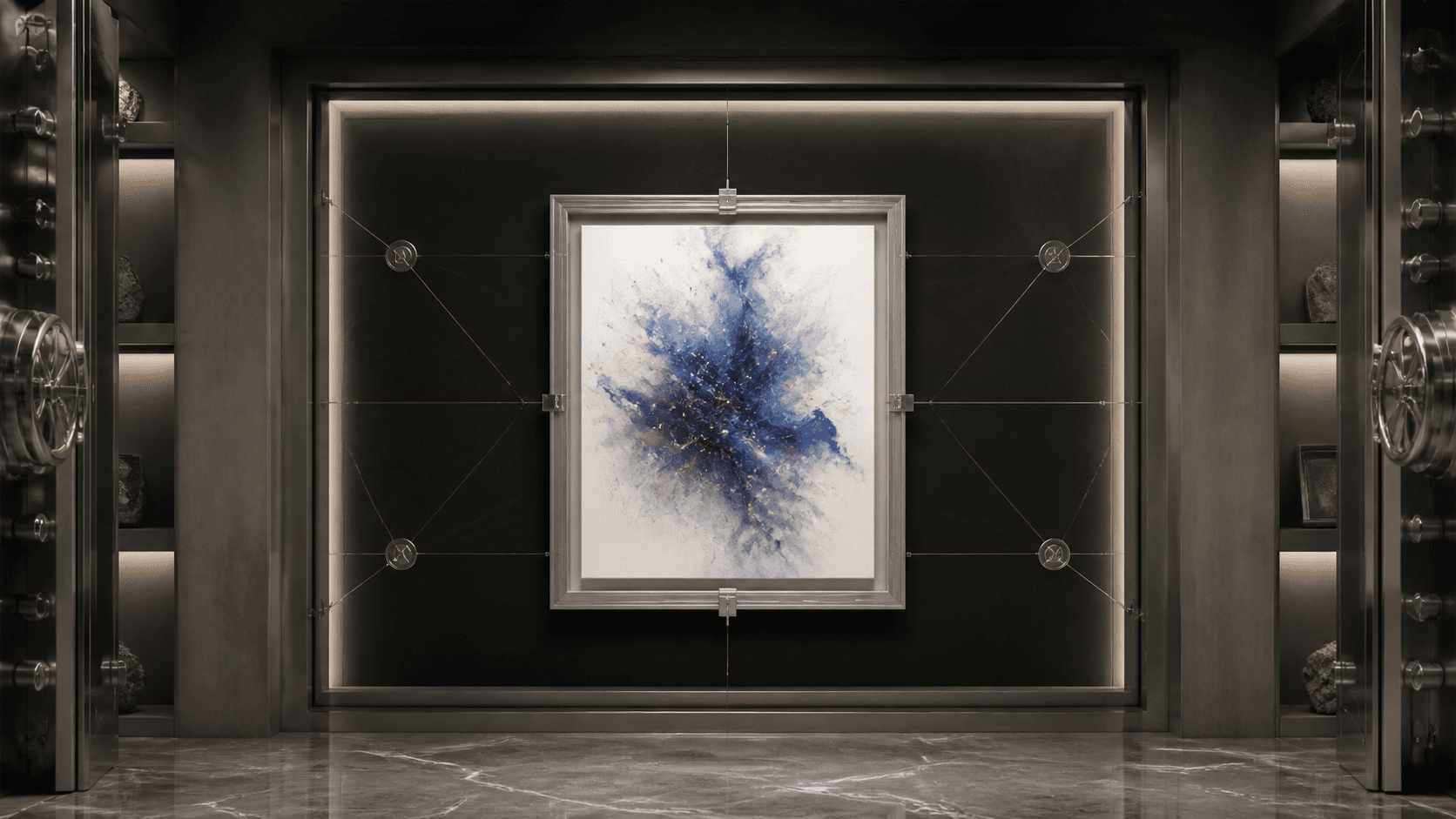
A one-of-one NFT asks for a different kind of attention than a large-edition collection. There are no trait charts or rarity rankings to lean on. The work stands alone, and the collector must evaluate the artist, the object, its provenance and the experience of living with it.
This framework is designed for looking closely. It does not assign a formula to artistic quality or predict market value. Instead, it organizes the questions that help a collector understand a singular digital work.
Begin with the work itself
Spend time with the piece before reading the sales history. Notice composition, movement, color, sound, duration, texture and technical choices. Ask what remains interesting after the first visual impact.
A strong one-of-one work often rewards repeated viewing. That does not mean it must be complex. Minimal work can have depth when every decision feels intentional. The useful question is not “does this look expensive?” but “does this work have a specific presence that another image could not replace?”
Establish authorship
Identify the artist through official channels and connect the minting wallet to that identity. Look for a consistent practice across portfolios, exhibitions, earlier tokens, interviews or process documentation.
Pseudonymous artists can have credible authorship. The key is continuity: a history of making, communicating and minting from identifiable accounts. A newly created profile with no traceable practice requires more caution, especially if the work resembles another artist's style.
Reverse-image search and portfolio comparison can help identify copied work. Generative and AI-assisted practices should still present clear authorship and a deliberate creative process.
Trace provenance on-chain
The token's contract and transaction history form part of its provenance. Confirm the original minting wallet, creation date, chain and token ID. Follow transfers from the artist to the current owner and note whether marketplace records match the blockchain.
Wrapped, migrated or bridged tokens may have a more complicated history. That is not necessarily a problem, but the relationship between the current token and the original work should be documented.
Be alert to duplicate mints across contracts or chains. An artist may intentionally create related editions, but a one-of-one claim should be precise about which work, file or expression is unique.
Understand the edition claim
“1/1” usually means a single token exists in a particular contract, but the artistic and legal meaning can vary. Ask whether physical editions, prints, studies, alternate renders or tokens on other chains also exist.
Uniqueness is strongest when the artist clearly states the scope of the edition. A transparent edition policy is more useful than a vague promise of absolute scarcity.
Learn the artistic intent and process
Artist notes, working files, sketches and interviews can deepen your understanding of the piece. Process matters particularly for code-based, interactive, animated and AI-assisted work, where the final file may not reveal the full set of decisions.
Look for a connection between the chosen medium and the idea. Is the work on-chain because the blockchain is conceptually relevant? Does interaction change the piece? Is the token primarily a certificate for a high-resolution file? Different answers can all be valid when they are clearly expressed.
Inspect presentation and technical quality
View the work in its intended format. A thumbnail cannot evaluate a high-resolution image, a long animation or a responsive browser piece. Check aspect ratio, resolution, color behavior, audio quality and performance on the display you expect to use.
For interactive work, confirm browser requirements and whether external libraries or servers are necessary. For video or audio, identify file formats and whether a durable master is available. A collector may also want access to a display-ready version while respecting the artist's distribution terms.
Review metadata and preservation
Open the token metadata and locate the media file. Determine whether the metadata and artwork use content-addressed storage, on-chain data or a conventional web server. Ask whether the token URI can be changed and whether the contract owner retains upgrade controls.
Permanence is not a single yes-or-no feature. IPFS content still needs to be pinned; interactive work may depend on external services; fully on-chain media may depend on a renderer. Good preservation begins with knowing every dependency.
Keep your own records of the token ID, contract, transaction, artist statement, license and relevant media details. This documentation is valuable even when the blockchain remains available.
Separate rights from token ownership
Purchasing the token does not automatically grant copyright or unrestricted commercial use. Read the license and artist terms. Clarify display rights, reproduction rights, commercial permissions and whether high-resolution source files are included.
When terms are absent, assume that copyright remains with the artist and seek clarification before commercial use.
Consider context without outsourcing judgment
Exhibition history, respected collections, curatorial writing and previous sales provide context. They can help establish an artist's practice, but they do not determine whether a specific work matters to you.
Market data for one-of-one art is often thin. A previous sale reflects one transaction at one moment, not a guaranteed valuation. Build your decision around the work and the amount you are comfortable committing without relying on immediate resale.
A concise 1/1 NFT checklist
- Experience the full work in its intended format.
- Verify the artist and original minting wallet.
- Trace provenance through the contract history.
- Clarify exactly what the one-of-one edition claim covers.
- Read the artist statement and understand the process.
- Inspect resolution, formats and display dependencies.
- Review metadata, storage and contract controls.
- Confirm licensing and usage rights.
- Record the provenance and preservation details.
- Collect because the work sustains your attention.
A singular work deserves singular attention. The most durable collecting decisions combine verification with curiosity: understand the object thoroughly, then decide whether it belongs in the story you are building.